Nineties Pop Culture Quiz for Millennials
If you came of age in the 1990s, pop culture was not something you scrolled through in a feed. It arrived in fixed appointments, through the television set, the cinema multiplex, the radio dial and the magazine rack, and that gave every hit a sense of shared occasion. A new episode of Friends, a Friday-night music video premiere or the latest teen film could dominate conversation at school on Monday morning. That common experience is part of why 1990s trivia feels so satisfying today: it is less about obscure facts than about recognising the cultural landmarks that shaped a generation.
Television alone could fill an entire quiz night. Friends premiered in 1994 and quickly became one of the decade’s defining sitcoms, while The Fresh Prince of Bel-Air, Seinfeld, Frasier and Beverly Hills 90210 helped set the tone for comedy and youth culture. Animated shows also carved out a huge space, with The Simpsons already a fixture and The X-Files turning conspiracy and aliens into mainstream conversation. Even the most casual viewer can usually place a line like “How you doin’?” or remember the eerie atmosphere of Mulder and Scully chasing the unexplained.
Music is where the decade becomes especially rich for quiz questions, because the 1990s were crowded with very different sounds that all managed to go mainstream. The boy band and girl group boom brought the Backstreet Boys, *NSYNC, the Spice Girls and TLC into living rooms and school discos, while grunge and alternative rock gave us Nirvana, Pearl Jam and Alanis Morissette. Hip-hop and R and B moved decisively into the centre of pop culture too, with artists such as Tupac Shakur, The Notorious B.I.G., Mariah Carey and Whitney Houston shaping the soundtrack of the decade. A good quiz can move from “Wannabe” to “Smells Like Teen Spirit” to “I Will Always Love You” and still stay firmly within the same cultural moment.
The films of the 1990s offer another route into nostalgia because so many of them became instant reference points. Titanic, released in 1997, was a global phenomenon, while Jurassic Park, The Matrix, The Lion King and Toy Story each helped define a different corner of the decade’s imagination. Teen cinema also thrived, with Clueless, She’s All That and 10 Things I Hate About You capturing the style and slang of the era in ways that still get quoted now. For millennials, a trivia question about a film poster, a theme tune or a famous line often works because the memory is visual as much as it is factual.
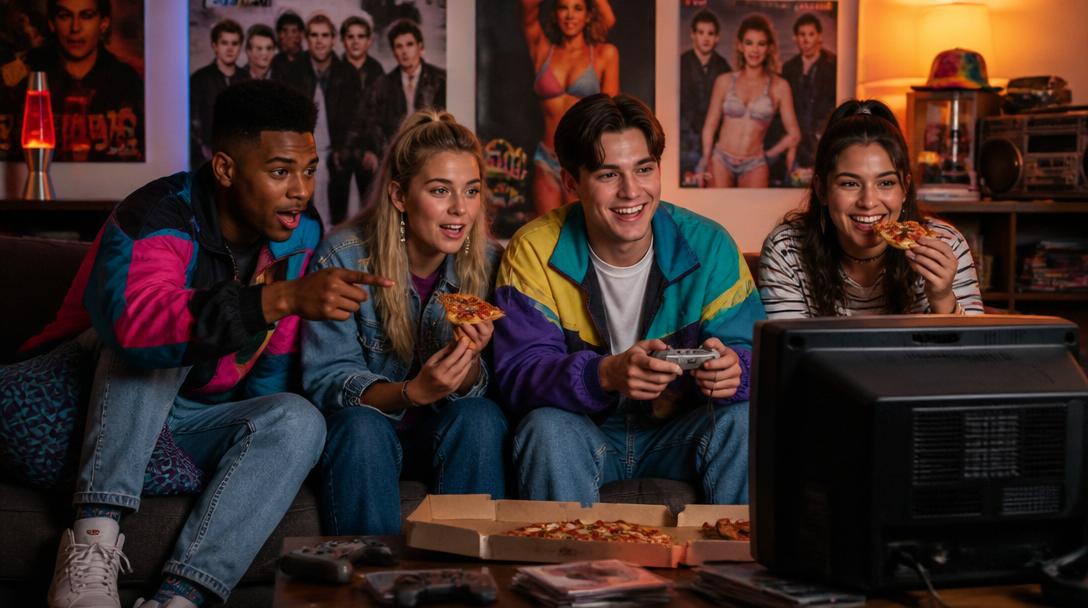
Fashion and technology are just as important to the quiz because they anchor the decade in everyday life. The 1990s gave us flannel shirts, chokers, butterfly clips, cargo trousers, platform trainers and the kind of denim that seemed to appear in every mall catalogue. At the same time, technology was changing fast but had not yet erased older habits: people rewound cassette tapes, waited for the dial-up connection to stop screeching and passed around printed photographs rather than camera rolls on a phone. The mix of old and new makes the period especially vivid, because many millennials remember both the thrill of the first internet search and the frustration of being disconnected the moment someone picked up the house phone.
That same blend of familiarity and novelty made children’s entertainment and snacks part of the cultural memory too. Nickelodeon, Disney Afternoon and Saturday morning cartoons delivered a steady stream of characters that still trigger recognition, from Rugrats to Doug to Pokémon as it spread through the late decade. Lunchboxes, meanwhile, were shaped by products that have become shorthand for childhood itself, including Lunchables, Dunkaroos and brightly packaged cereal promotions tied to film releases or toy lines. In a quiz, these details matter because they are not really about consumption; they are about the texture of daily life.
What gives 1990s trivia its staying power is that the decade was the last one to feel collectively experienced in quite the same way. Before social media fragmented attention, a hit song, a TV finale or a blockbuster could be known by millions at roughly the same time, and that created a shared memory bank that still works beautifully in quiz form. Millennial nostalgia is powerful because it reaches beyond simple remembrance and into recognition of an era when culture seemed to arrive in bigger, slower, more obvious waves. A well-made 90s quiz does not just ask whether someone remembers the decade; it asks whether they can still hear it, see it and laugh at it as clearly as they did then.