Landmarks That Tell the World’s Story
A landmark is more than a backdrop for postcards and travel photos. It is a shorthand for history, power, faith, ambition, and sometimes survival, which is why so many of these places become instantly recognizable across languages and borders. In trivia, that recognition can feel effortless when a shape is famous enough, but the real fun comes from noticing the clues that make each site distinctive, from a tower’s profile to a bridge’s colour to the way a monument sits in its landscape.
Take the Eiffel Tower, whose iron lattice has come to stand for Paris itself. Designed by Gustave Eiffel’s engineering company for the 1889 Exposition Universelle, it was originally meant to be a temporary structure, not a permanent emblem of the city. Today it is one of the most photographed landmarks in the world, yet what often catches people out in quizzes is how many other places copied its basic idea without ever matching its cultural force. The tower’s fame rests not only on height or design, but on the way it transformed from a disputed project into a beloved symbol of French modernity.
The same is true of the Statue of Liberty, which is immediately identified by its torch and crown, even when seen from a distance. A gift from France to the United States, it was dedicated in 1886 and quickly became a symbol of welcome and liberty, especially for immigrants arriving by sea. Its setting matters as much as its form, because the statue’s placement in New York Harbor helped make the harbour itself part of the image. In a trivia round, that combination of symbolism and location makes it difficult to confuse with any other monument, even though many cities around the world have statues representing freedom or national identity.
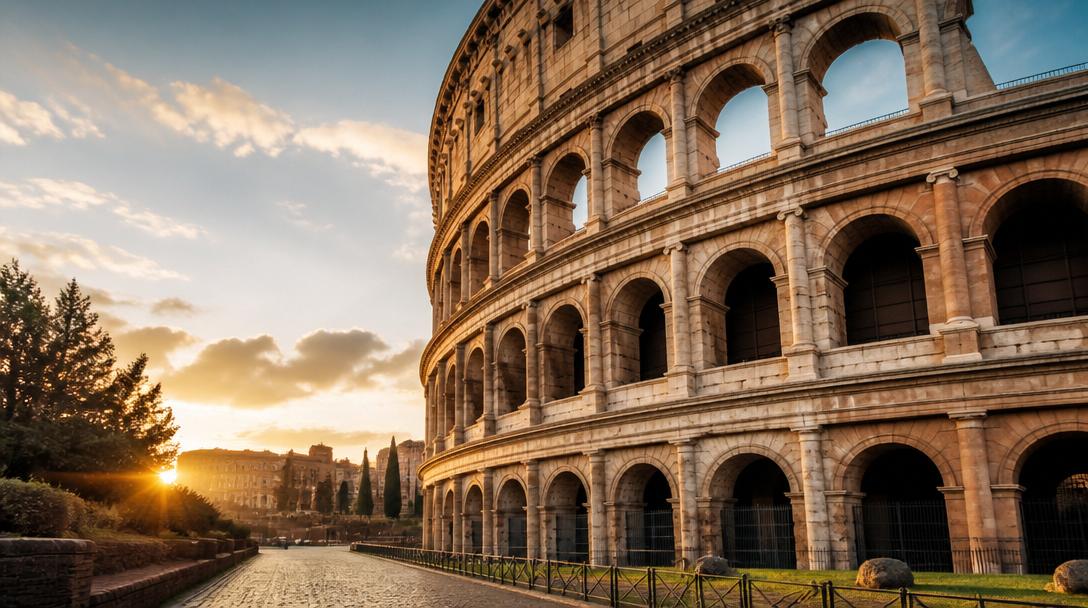
Some landmarks are recognised less for symbolism than for sheer architectural drama. The Colosseum in Rome is one of the clearest examples, with its elliptical shape and tiered arches instantly evoking the ancient city. Built under the Roman emperors Vespasian and Titus in the first century AD, it remains one of the most important surviving structures from the Roman Empire. People often remember it as an arena for gladiatorial combat, which is broadly true, but its history also includes public spectacles, ceremonies, and the long process by which a ruin became one of the world’s best-known historical sites.
Then there are places whose fame depends on a very specific visual trick. The Leaning Tower of Pisa is not the tallest bell tower in Italy, nor the most ornate, but its tilt makes it impossible to mistake. Construction began in the 12th century, and the lean developed because of unstable ground beneath the foundation, turning an engineering flaw into global celebrity. Travellers and quiz players alike are drawn to it because the tower is so often shown from the same angle, yet the real landmark is more than a novelty photograph; it is part of a larger cathedral complex that reflects medieval religious ambition in Pisa.
In Britain, few landmarks are as instantly recognised as Big Ben, though the name is often used loosely for the whole clock tower at the Palace of Westminster. Strictly speaking, Big Ben is the nickname of the Great Bell, while the tower itself has become one of London’s most enduring images. Its Gothic Revival design, the rhythmic chime of the clock, and its position beside the Houses of Parliament all contribute to its status. For trivia purposes, it is a classic example of how a landmark can become even more famous than the institution it physically serves.
Other sites are iconic because they seem to connect a nation’s past with its present in a single view. The Taj Mahal in Agra is one of the most recognisable buildings on earth, admired for its white marble, symmetrical gardens, and reflective pools. Built in the 17th century by the Mughal emperor Shah Jahan as a mausoleum for his wife Mumtaz Mahal, it is both a masterpiece of design and a deeply personal memorial. That mix of beauty and grief gives the monument a resonance that goes well beyond architecture, which is why it appears so often in quizzes about world heritage and famous places.
Not every famous landmark is a building. The Great Wall of China stretches across mountains and valleys, making it one of the most ambitious defensive projects in human history. Its construction and reconstruction took place over many centuries, involving different dynasties rather than a single moment or ruler. What many people remember is the idea of an unbroken wall visible from space, but that is a myth; the real achievement lies in its scale, endurance, and the way it adapted to changing military needs. That makes it a particularly satisfying trivia answer, because the correct recognition comes from history, not legend.
What these landmarks share is not just fame, but the way they condense stories into shapes people can remember. A quiz about historical places works because the eye often recognises a silhouette before the mind recalls the details, whether it is a dome, a spire, an arch, or a tower leaning at an impossible angle. The best questions do more than ask where a landmark is found; they invite readers to think about why it became famous in the first place, and why some places outlast the centuries as symbols of entire cultures.