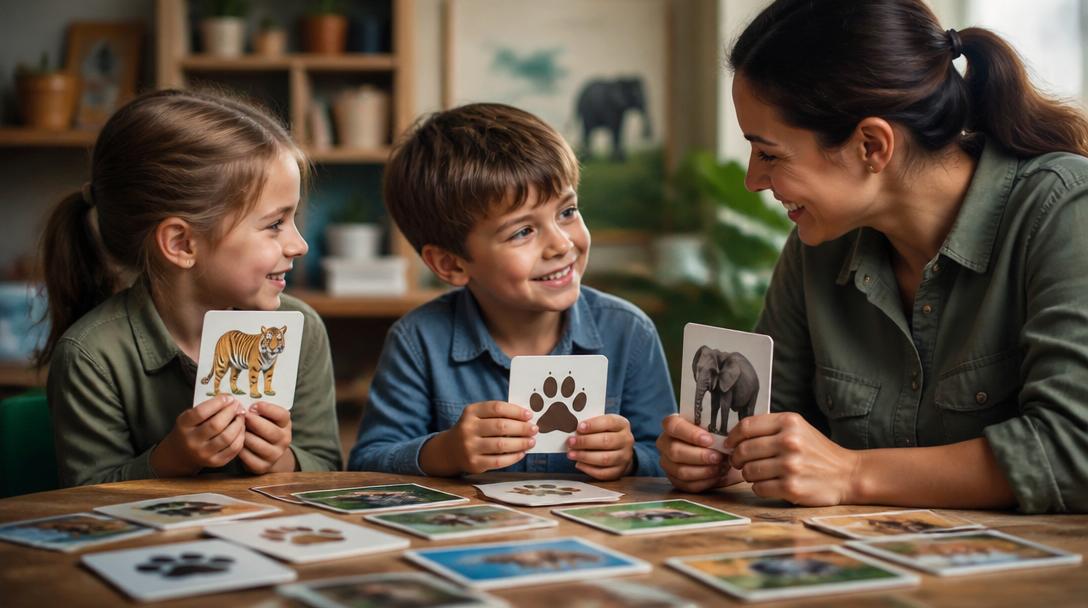
Wildlife Quiz Games for Curious Kids
Children often know far more about animals than adults expect, especially when the questions are playful and the clues are clear. A quiz that asks about a lion’s roar, a penguin’s feathers or a frog’s life cycle can feel like a game, but it is also a small lesson in biology, geography and observation. That is why wildlife quizzes work so well for kids: they reward curiosity instead of memorisation alone.
The smartest way to build excitement is to start with animals children already recognise and then gently widen the circle. A question about which mammal lays eggs may lead to the platypus, while a prompt about the tallest animal in the world opens the door to the giraffe and its striking long neck. When children answer correctly, they feel capable; when they miss, they usually remember the fact next time because it arrived in a fun setting rather than a classroom drill.
One of the joys of wildlife quizzes is that they can be shaped to suit different ages. Younger children usually enjoy image-based questions, sound clues and simple choices between familiar creatures such as bears, zebras and dolphins. Older children can handle trickier details, such as the difference between reptiles and amphibians or why a camel is so well adapted to desert life. The key is to keep the challenge fair, because a quiz should feel like an adventure, not an exam.
Animals also offer a rich way to talk about habitats, which gives the quiz more depth without making it feel heavy. A child who learns that polar bears live in the Arctic, not the Antarctic, is not just collecting trivia but building an understanding of how living things fit into different environments. The same goes for questions about rainforests, coral reefs, grasslands and wetlands, each of which supports its own remarkable cast of creatures. These settings help children see that wildlife is connected to place, climate and food sources.
It can be especially effective to include behaviour-based questions, because animal actions are often more memorable than dry facts. Children tend to remember that octopuses can squeeze through tiny spaces, that bees communicate through movement, and that some birds migrate long distances when the seasons change. They may also be fascinated by parental care in the animal kingdom, from emperor penguins taking turns protecting eggs to kangaroos carrying young in pouches. Facts like these spark questions, and questions are the engine of learning.
A strong kids’ quiz should also make room for surprise. Many children assume the biggest animal on land is the most impressive, until they learn that the blue whale is the largest animal ever known to have lived, and that size does not always mean strength or speed. Others are amazed that bats are mammals, or that some frogs can survive freezing temperatures. These moments of astonishment matter because they encourage children to rethink what they thought they knew.
There is also real value in mixing common animals with lesser-known species. If every question features only lions, tigers and elephants, the quiz may be fun for a moment but it will not broaden a child’s horizons very much. Adding animals such as the axolotl, the cassowary or the narwhal can introduce unusual adaptations and memorable shapes, while still keeping the tone light. Children love animals that seem a little strange, provided the explanation is simple and vivid.
The best quizzes often invite children to reason rather than simply recall. For example, asking which animal is most likely to be active at night encourages them to think about owls, bats and nocturnal predators. Asking which creature has webbed feet can lead them to ducks, otters or frogs, and asking which animal has a shell can bring in turtles, snails and crabs. Questions like these train young minds to connect features with functions, which is a valuable skill far beyond the quiz itself.
Parents and teachers can make the experience even better by treating each answer as a doorway to a bigger conversation. If a child guesses that a cheetah is the strongest land animal, it is a good chance to explain that cheetahs are the fastest, while strength belongs to different species depending on how you measure it. If a child wants to know why flamingos are pink, that can lead to a discussion of diet and pigments. These little exchanges keep the quiz alive after the answer is given.
A wildlife quiz for kids works best when it feels generous, lively and a little bit surprising. It should celebrate the creatures children already love while nudging them toward species they may never have noticed before. When that happens, the quiz becomes more than a game, because it helps children look at the natural world with sharper eyes and a deeper sense of wonder.