Landmarks That Shape the World
Historical landmarks have a peculiar power over memory. A single silhouette can summon a country, a century, or even a whole idea of civilisation, whether it is the domes of Istanbul, the battlements of a castle, or the weathered stones of a temple. That is why recognising them is such a satisfying kind of trivia: the challenge is not only to name a place, but to see how architecture, geography and history combine to make it unforgettable.
Many of the world’s most famous landmarks were not built to become icons at all. The Colosseum in Rome, completed in the first century AD, was designed as a vast amphitheatre for public spectacles, yet today it stands as one of the clearest reminders of Roman engineering and imperial ambition. Its broken arches and exposed interior are instantly recognisable, but the building’s scale is what still impresses visitors most, especially when they realise how many centuries it has survived through earthquakes, quarrying and changing use. In a trivia setting, the Colosseum is often identified before the question is even finished, which is a testament to how deeply it has entered global visual culture.
The same is true of the Great Wall of China, though it is often misunderstood as a single continuous wall rather than a network of fortifications built and rebuilt over many dynasties. Its image usually appears as a ribbon of stone or earth climbing across ridgelines, and that dramatic profile has helped make it one of the most recognised landmarks on Earth. What makes it especially interesting as a quiz subject is that it is less about one exact viewpoint and more about a broader historical story of defence, labour and state power. A photograph of the wall can look deceptively simple, yet it can refer to centuries of construction and regional variation.
Some landmarks are recognised not because they are ancient, but because they represent a moment when modern design became part of the historical record. The Eiffel Tower in Paris, finished in 1889 for the Exposition Universelle, was once criticised by artists and writers who thought it looked out of place. Today it is one of the most familiar structures in the world, and its iron lattice has become as closely associated with Paris as the Seine itself. The tower works so well in trivia because its shape is unmistakable, but its story also reminds us that landmarks do not become beloved immediately; sometimes public opinion needs time to catch up with engineering.
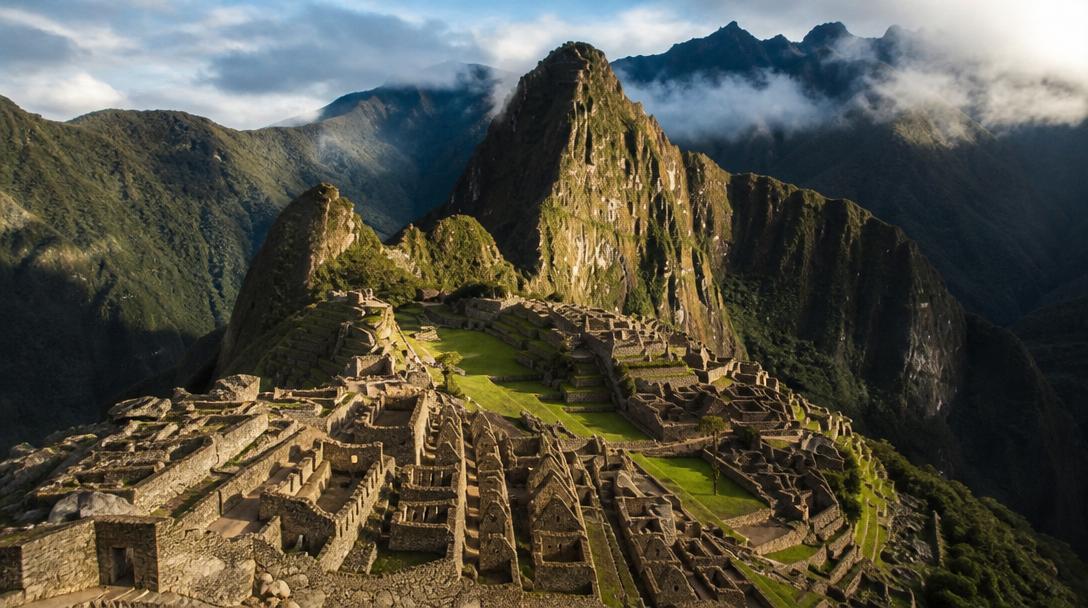
Then there are places whose fame comes from their setting as much as from their structure. Machu Picchu in Peru is a perfect example, perched high in the Andes and framed by steep green mountains that make it look almost unreal in photographs. Built in the 15th century and later abandoned, it was brought to wider international attention in the early 20th century and has since become one of the most enduring images of the Inca world. It is often mistaken for a lost city in the romantic sense, but its true appeal lies in the precision of its stonework and the extraordinary way it fits into the landscape.
Not all famous landmarks are grand in the same way. The Statue of Liberty in New York is smaller than some people imagine relative to its surroundings, yet it carries enormous symbolic weight as a gift from France and a sign of welcome. Its torch, robe and crown are instantly identifiable, which makes it a favourite in recognition quizzes, but the monument’s meaning is tied just as much to immigration and civic identity as to its physical form. A similar thing can be said of London’s Tower Bridge, which is often confused with London Bridge despite their very different appearances and histories. The bridge’s twin towers and lifting bascules have made it one of the city’s most photographed sights, and its distinct profile has helped generations of travellers and quiz players tell it apart from other river crossings.
What makes landmark trivia so appealing is that it rewards close observation. A domed roof may suggest a mosque, a palace or a cathedral; a stone staircase might point to an ancient temple, a medieval fortress or a colonial monument. The trick is to notice the details that carry the most meaning, such as the shape of a tower, the colour of the stone, the surrounding landscape or the style of decoration. The more you look, the more you realise that landmarks are not just famous because they are old or beautiful. They are famous because they have become visual shorthand for history itself, and that is why a single image can still stop us in our tracks.