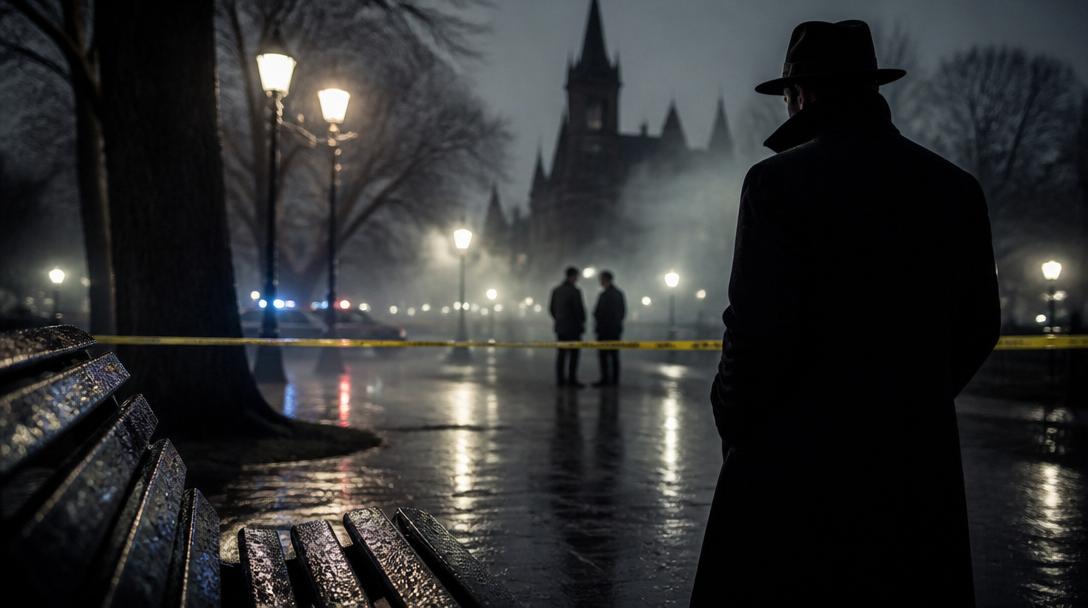
The World’s Most Elusive Murder Mysteries
The enduring power of an unsolved criminal case lies in its unfinished business. A murder without a name attached to it, a disappearance with no body, or a crime scene that seems to contradict itself can outlive headlines and outlast the people who first followed the trail. These cases become part police file, part folklore, and part warning that even the best investigators can be left with fragments instead of answers.
Among the most notorious is the Jack the Ripper series of murders in Whitechapel in 1888. At least five women were killed in a brutal, highly publicized spree that terrified London and helped define the modern idea of a serial killer. Dozens of suspects have been proposed over the years, from a local butcher to a royal physician, but no theory has ever produced proof strong enough to settle the matter. What makes the case endure is not only the violence, but the way it exposed the limits of Victorian policing, forensics and record keeping.
The disappearance of the Lindbergh baby in 1932 is another case that has never fully lost its grip on the public imagination. The 20-month-old son of aviator Charles Lindbergh and Anne Morrow Lindbergh was taken from the family home in New Jersey, and the ransom note that followed turned the kidnapping into a national obsession. Bruno Richard Hauptmann was convicted and executed in 1936, yet questions about accomplices, evidence handling and whether the full truth was ever uncovered still shadow the case. Even when a case ends in a verdict, doubt can keep it alive for generations.
In France, the murder of Louis XVII was never solved because the child himself became a symbol of uncertainty. The young son of Louis XVI and Marie Antoinette died in captivity during the French Revolution, but centuries later rumors persisted that he had survived and escaped. Those claims did not involve a conventional criminal investigation in the modern sense, yet the surrounding mystery has inspired fraud, false identities and endless debate over what really happened in the Temple prison. Sometimes the greatest unsolved cases are less about a single act than about the collapse of all reliable witnesses.
The case of the Black Dahlia, the 1947 killing of Elizabeth Short in Los Angeles, remains one of America’s most famous unsolved murders. Short’s body was found mutilated and posed in a vacant lot, and the sensational press coverage turned the investigation into a nightmare of tips, confessions and false leads. The Los Angeles Police Department pursued hundreds of suspects over the years, but no one was ever charged. The case still fascinates because it combines Hollywood glamour, brutal violence and the uneasy sense that the killer may have blended back into ordinary life.
Then there is the Zodiac Killer, who terrorized Northern California in the late 1960s and early 1970s. He claimed responsibility for multiple murders, sent taunting letters and ciphers to newspapers, and seemed to relish the cat-and-mouse game with police and reporters. Investigators identified many possible suspects over the years, but none was conclusively linked to the crimes before the case went cold. The Zodiac case is especially unsettling because the killer was not only elusive but performative, turning his crimes into a public puzzle.
Not all of history’s greatest unsolved cases involve a single murderer. The 1969 bombings in Italy known as the Piazza Fontana bombing, for example, became entangled in allegations of political manipulation, false leads and state secrecy. The original attack killed 17 people in Milan and shook Italy during a period of unrest known as the Years of Lead. Years of trials and reversals followed, but the broader truth behind responsibility and complicity remained contested, showing how crimes can stay unresolved when they intersect with power. In such cases, the mystery is not merely who did it, but who benefited from the confusion.
Perhaps that is why unsolved cases continue to grip the public long after the original investigators are gone. Each one leaves behind a trail of clues that feel almost complete, as if the answer sits just beyond reach. The names change, the cities change and the eras change, yet the same human frustration remains: the knowledge that a terrible act happened, and the deeper knowledge that history may never fully explain it.