The Puzzle That Outwits Most Readers
There is a reason Einstein’s Riddle keeps resurfacing in newspapers, classrooms, and online quiz sites. It looks simple at first glance: a row of houses, a set of clues, and a question that seems as if it ought to be answered in minutes. Yet the moment you try to hold all the details in your head, the puzzle begins to show its teeth. The challenge is less about brilliance in the dramatic sense and more about resisting the urge to guess before the evidence is complete.
The riddle is usually presented as a logic-grid puzzle, a form that asks solvers to match people, pets, drinks, cigarettes, and house colours by using a series of clues. The original version most people know is often described as Einstein’s Riddle, though there is no solid evidence that Albert Einstein himself created it or that it can be traced directly to him. What matters is the method it rewards. A good solver does not leap to a dramatic answer; they build certainty one small deduction at a time.
That is why the puzzle feels so satisfying when it works. Each clue removes possibilities, and each removal strengthens the next step. If one house is red and another must be green, then the remaining colours have fewer places to go. If the man who smokes a certain brand lives next to the man with the fish, then adjacency becomes just as important as colour or nationality. The puzzle becomes a web of relationships, and the solver’s job is to keep the strands from tangling.
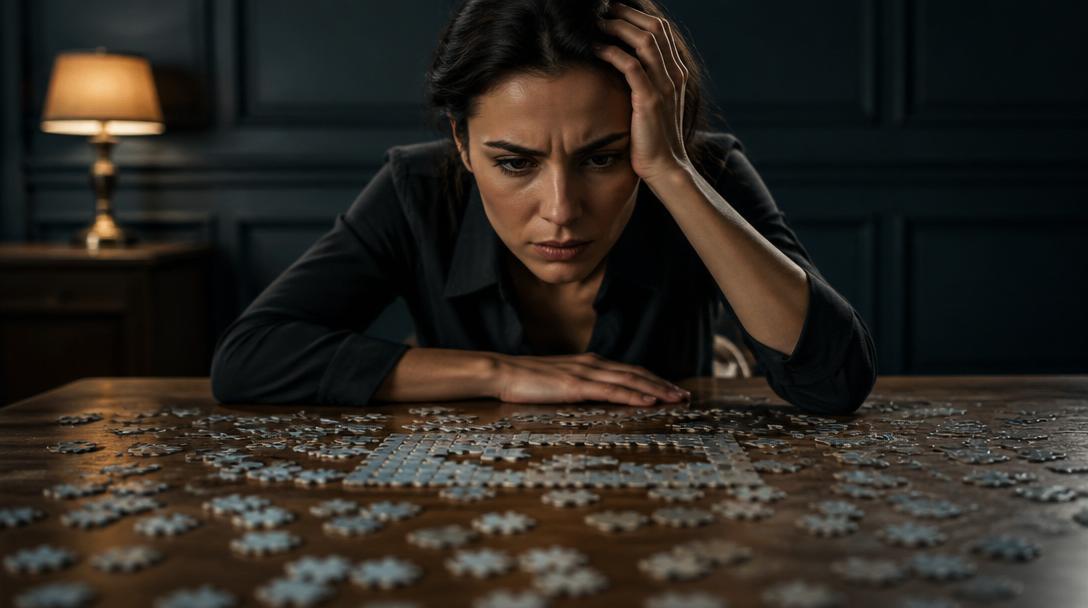
The appeal of Einstein’s Riddle also comes from the way it exposes how easily the mind can be fooled by confidence. Many people assume they are strong at logic because they are good at spotting patterns. In practice, though, pattern recognition can be a trap when a puzzle demands exactness. A clue that seems obvious may only be half-useful, and an early assumption can poison everything that follows. The best approach is usually to mark what is certain, test what is possible, and ignore the temptation to fill gaps with intuition.
That discipline is why teachers and quiz writers like logic-grid puzzles so much. They reward careful reading, working memory, and persistence, but they do so in a way that feels playful rather than academic. A school worksheet can feel dry; a riddle about houses, drinks, and pets feels like a game. Yet beneath the surface it is teaching the same habits that help in maths, coding, editing, and even planning a complicated journey with multiple moving parts.
There is also a social reason the puzzle endures. Few things are as appealing as a challenge that invites comparison. People enjoy asking friends whether they solved it, how long it took, and whether they used a grid or tried to do it in their heads. That conversation creates its own mystique, and the title Einstein’s Riddle adds another layer, suggesting that the puzzle sits somewhere between parlour game and intellectual rite of passage. Even when the name is more marketing than history, it still helps the puzzle feel larger than a simple quiz question.
If you want to solve it well, the key is to treat the clues like evidence in a case file. Write down the definite matches first, then look for contradictions and exclusions. A clue that says one resident lives immediately to the left of another is more powerful than it first appears, because it fixes order rather than just association. Likewise, clues about “next to” can narrow the field quickly once a few anchor points are in place.
This is where many people lose patience, and that is exactly why the puzzle is a good test of method. The riddle does not ask for genius in the popular sense of sudden insight. It asks whether you can stay organised when the answer is still out of reach. A person who is calm, systematic, and willing to revisit earlier assumptions may beat someone who prides themselves on quick thinking.
The modern internet has only strengthened the puzzle’s reputation. Online versions let users drag and drop clues, colour-code grids, and compete for speed, which gives the old format new life. But the core experience remains unchanged. You start with uncertainty, add structure, and gradually turn a tangle of clues into a single answer that feels inevitable only in hindsight.
That is the real reason Einstein’s Riddle continues to fascinate. It flatters the clever while rewarding the careful, and it proves that logic is often less about dramatic leaps than about steady progress. The final answer, when it comes, is not just a solution to a puzzle. It is a small demonstration of how order can emerge from confusion when every clue is treated with the right amount of respect.