Family Trivia Night Brings Everyone In
The real secret of family trivia is not making the questions impossibly hard. It is building a game that lets a seven-year-old feel clever after naming a cartoon character while a grandparent gets a turn shining on history, music, or geography. When that balance works, the whole table stays engaged, and even the wrong answers become part of the entertainment.
A strong family quiz usually mixes broad subjects rather than leaning too heavily on one area. Questions about animals, food, films, landmarks, sports, and everyday science give different ages a chance to contribute from their own experience. Children often know more about animated films, modern pop culture, or wildlife than adults expect, while adults may remember classic songs, old television, or schoolroom facts that younger players have never heard of. That back-and-forth is what keeps the pace lively and the mood generous.
The best tone is playful rather than competitive in the harsh sense. A family trivia night should feel more like a shared game than a test, so the wording of the questions matters as much as the answers. Instead of asking for obscure dates or specialist knowledge, it helps to aim for questions people can reason through, guess at, or answer after a little discussion. A clue about the tallest mountain in the world, for instance, invites a child to remember a classroom lesson and gives adults a fair chance to help if they know the basics of geography.
One reason trivia works so well across generations is that memory is stored in different ways. A child may instantly recall the names of planets from a song or a school project, while an adult might remember the same fact because of a book, a documentary, or an old quiz show. That means the game becomes less about age and more about the paths people have taken through life. In a household setting, that variety feels refreshing because it allows everyone to be useful at different moments.
The format can also make a huge difference. Quick-fire rounds are useful for energy, but so are picture rounds, audio clues, and simple “what am I?” puzzles that let younger players join in without needing to read long questions. A round based on household objects, famous landmarks, or common animals can be especially effective because the answers feel familiar without being dull. If the aim is a family evening rather than a tournament, the game should move quickly enough to hold attention but slowly enough to let people think.
Another useful idea is to vary the difficulty within the same round. A quiz that starts with easy questions and gradually becomes trickier helps everyone settle in and prevents the strongest player from running away with the game too soon. It also means younger children can contribute early before the questions become more demanding. A well-set family quiz often feels as if it is building confidence as it goes, which is far more enjoyable than one that immediately leaves half the table out of the running.
Themes can help too, especially if you want the evening to feel fresh from one week to the next. One week might focus on food and drink, another on places around the world, another on famous inventions or animals from different habitats. The theme gives the quiz a sense of shape without making it feel narrow, and it can be adapted to the ages in the room. If children are very young, the theme can lean on colours, shapes, and everyday objects; if the group is older, the questions can become more detailed without losing the family-friendly spirit.
There is also a quiet educational value in a well-run trivia night. Children hear new facts in a setting that feels relaxed, while adults get to rediscover things they once knew and may have forgotten. Because the game is social, the learning happens almost by accident, which is often the best kind. A child who hears a parent explain the difference between a continent and a country, or a grandparent describe a classic film, is picking up knowledge in a way that feels natural rather than forced.
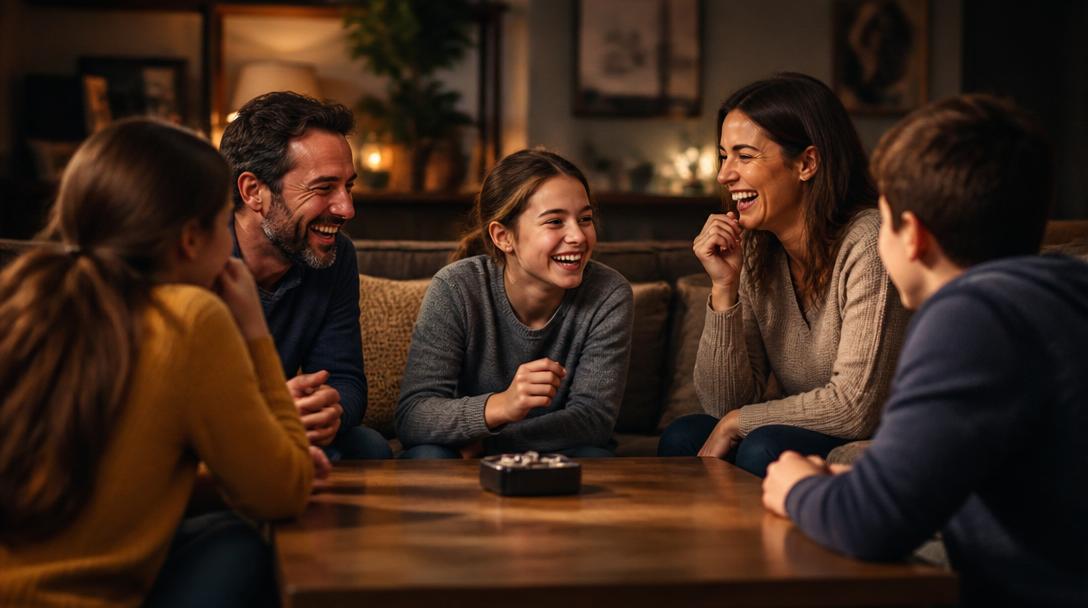
What matters most, though, is the atmosphere at the table. The funniest family quiz nights are rarely the ones with the most difficult questions; they are the ones where people laugh at their wrong answers, argue gently over whether a clue was fair, and celebrate unexpected successes. A trivia night that ends with everyone wanting one more round has done exactly what it should. It has turned general knowledge into a shared habit, and for one evening at least, the whole family has been on the same team even while trying to beat each other.