Math Games That Make Kids Think
Parents and teachers often talk about making maths fun, but the most effective activities usually do something more specific than that. They give children a puzzle to solve, a pattern to spot, or a small decision to make, which means the child is not just repeating facts but using them. That shift matters because maths and logic both become easier to grasp when they are tied to movement, conversation, and play rather than to a blank page alone.
Simple quizzes work especially well when they feel like a challenge rather than a test. A child who is asked to work out which number comes next in a sequence, or which shape belongs in a set, is practising the same thinking skills used in more formal lessons. The difference is that the pressure is lower, the feedback is immediate, and the child can try again without feeling embarrassed. That is one reason short quiz rounds at home can be so effective: they build confidence while keeping attention focused.
The best questions for younger children are usually concrete. Asking how many apples are left after two are eaten, or which of two toy cars is longer, gives children something they can picture straight away. Once they are comfortable with that, logic questions can stretch the mind a little further, such as asking what comes next in a simple colour pattern or which item does not belong in a group. These exercises help children learn that maths is not only about sums, but also about noticing relationships and explaining why an answer makes sense.
It also helps when quizzes connect to everyday life. Children can count coins while pretending to shop, compare the lengths of pencils and rulers, or estimate how many steps it takes to cross a room. Even a kitchen can become a classroom if a child is asked how many spoonfuls of flour are needed, or which measuring jug holds more. Everyday examples make the subject feel useful, and usefulness is a powerful motivator because children are more likely to remember what they can see working in real life.
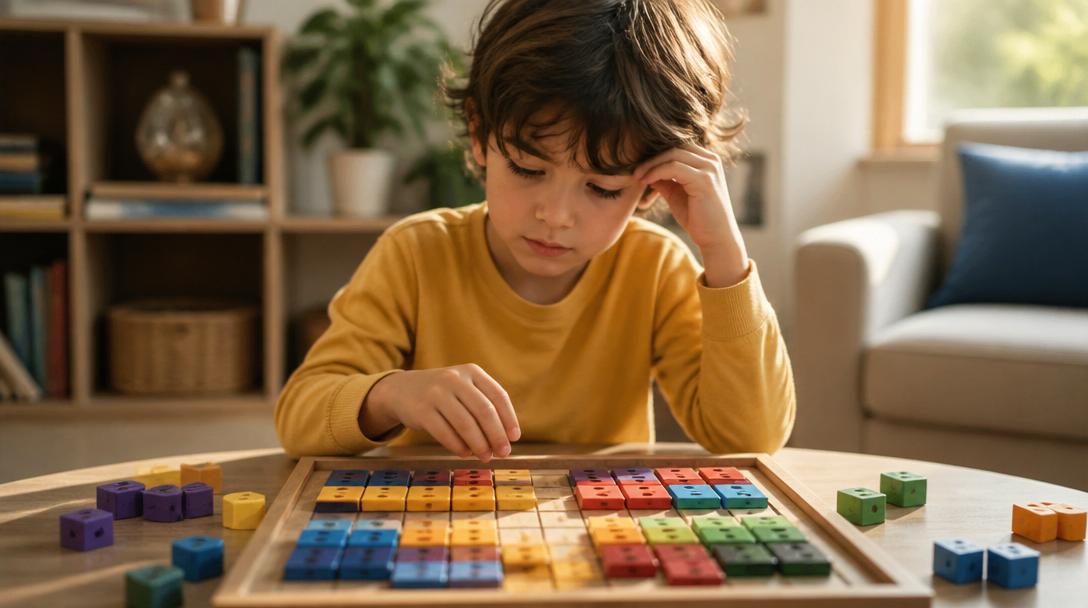
Logic games are especially good at teaching patience. A child might need to sort objects by size, colour, or shape before spotting the hidden rule, and that process encourages careful observation. Another useful activity is the classic odd-one-out question, which asks children to explain why one item does not fit. There is often more than one possible answer, and that is part of the appeal, because it shows children that reasoning can be flexible as long as they can support their thinking.
Short quiz sessions can also be turned into family games without much preparation. A parent can ask quick-fire questions during a walk, on the school run, or while waiting for dinner to be ready. For example, a child might be asked to estimate how many windows are on a row of houses, or to decide which is heavier by looking at two objects. These moments are useful because they show that maths is not trapped in a workbook; it lives in the world around us.
Rewards matter too, but they do not have to be large. A child may be pleased simply to earn a point, choose the next question, or explain an answer to someone else. Praise is most effective when it recognises effort and clear thinking rather than speed alone. That is important because some children are quick with numbers while others need a little more time, and a good quiz should reward both accuracy and persistence.
The logic part of these quizzes is often what makes them memorable. A child who works out a pattern in shapes or numbers is doing the early stages of mathematical reasoning, which becomes increasingly important as lessons grow more complex. The aim is not to rush children into advanced material, but to help them feel at ease with the idea that problems can be solved step by step. Once they realise that, maths stops looking like a mystery and starts looking like something they can actually handle.
What makes these quizzes especially valuable is their adaptability. The same game can be made easier for a younger child by using larger objects and simpler counting, or harder for an older one by adding extra steps and trickier patterns. That flexibility means the fun can grow with the child, which is one reason a good maths quiz at home can become a regular habit rather than a one-off activity. When children begin to expect a puzzle instead of a lecture, learning often becomes something they are eager to join in with.