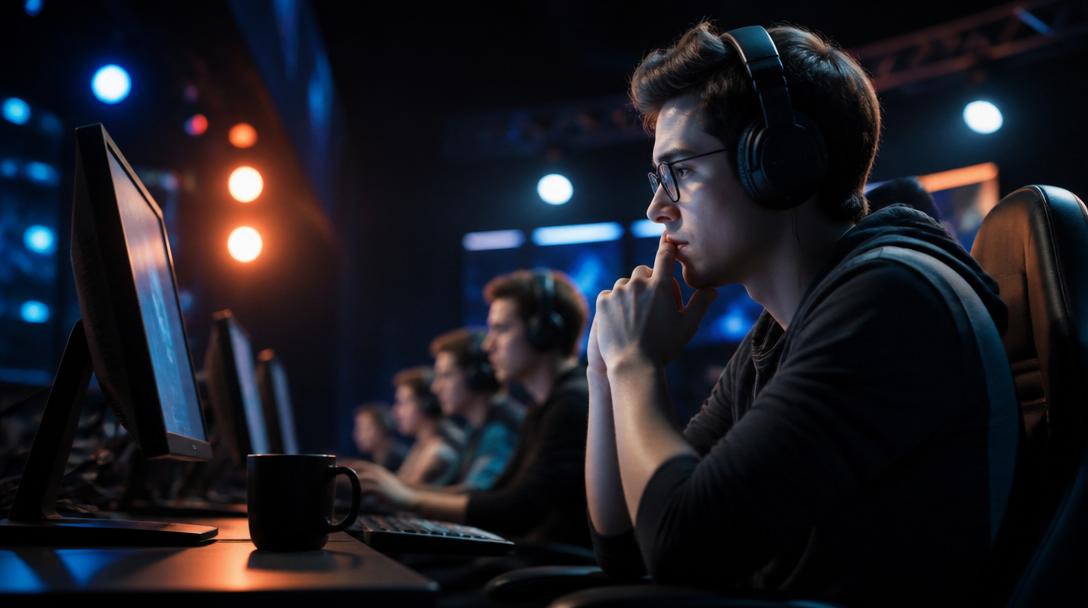
Inside the Online Quiz Master Tournament
For many people, the appeal of an online quiz tournament is not just the chance to win. It is the rare opportunity to measure knowledge in a setting that rewards both preparation and instinct, with every answer delivered under pressure and every round visible to everyone watching. That combination gives the format a peculiar tension: the questions may span history, science, sport and culture, but the real contest is often about who can stay calm when the timer is ticking down.
Unlike a casual quiz played for fun in a group chat, a tournament format changes the stakes. Players are not simply trying to remember facts; they are learning how to read question styles, manage time and recover quickly after a mistake. In that sense, the online quiz master tournament borrows from chess, trivia nights and competitive gaming at once, creating a contest that is as much about discipline as raw knowledge. The strongest players are usually those who understand that intelligence online is not one single skill but a mixture of recall, pattern recognition and careful decision-making.
The digital setting also reshapes the experience in ways that older quiz formats never could. A player sitting at home may be competing against people in different cities or even different countries, yet the format still feels immediate because the answer appears on the same screen as the question. That speed matters, because online tournaments often reward not only correct answers but also quick responses, and the pressure of the clock can expose hesitation that would never show in a slower conversation. It is this blend of accessibility and intensity that has helped online quizzing move from a niche hobby into a serious pastime for people who enjoy mental competition.
There is also a practical reason the format has grown so popular: it removes many of the barriers that used to keep quiz events local. A player no longer needs to travel to a venue, gather a team or wait for a scheduled pub night to take part in a serious challenge. Instead, they can join from a laptop or phone and compete on an evening that suits them, which makes the format especially attractive to people with busy work lives or family responsibilities. The result is a wider and more varied pool of contestants, all brought together by the same basic urge to prove they can think fast and think well.
What makes the tournament especially compelling is that it tests intelligence in public. In a private study session, a wrong answer is just a mistake; in a live tournament, it becomes part of the contest, visible in real time and often impossible to forget. That visibility can be daunting, but it is also what gives the format its energy, because every correct response feels earned and every close call raises the tension for the next round. For many participants, the satisfaction comes not merely from scoring well but from performing well when the stakes are clear and the audience is watching.
The best competitors often prepare in surprisingly methodical ways. They read widely, revisit topics they once found difficult and practise under timed conditions so that the online environment feels less intimidating on the day. Some focus on broad general knowledge, while others build strength in specific areas such as sport, film or geography, hoping to cover weaknesses with depth in chosen subjects. That balance between breadth and focus is one of the quiet truths of any serious quiz tournament: a wide knowledge base helps, but the ability to stay organised under pressure can matter just as much.
Another reason the format resonates is that it gives intelligence a visible shape. In everyday life, knowledge is often scattered across work, conversation and routine problem-solving, but a tournament gathers it into one clear test. That makes the online quiz master event appealing to people who enjoy the idea that learning can still feel competitive, social and a little theatrical. The screen becomes a stage, the questions become the script and the player’s own judgment decides whether they move forward or fall behind.
In the end, the online tournament is less about proving that one person knows everything and more about showing how knowledge behaves when it is tested in real time. A strong contestant is rarely the one with a perfect memory alone, but the one who can adapt, recover and keep answering with confidence when the pace rises. That is why the format has such staying power: it turns intelligence into a live event, and it gives anyone with curiosity, discipline and a steady nerve the chance to compete on equal terms.