Horror Movie Trivia That Stays With You
Horror has always been one of cinema’s most fertile genres for trivia because it thrives on atmosphere, improvisation, and practical ingenuity. Unlike many polished studio productions, horror films often depend on limited budgets, fast shoots, and bold creative choices that become part of the legend. That is why fans can talk for hours about a single prop, a casting decision, or a scene that was nearly cut before it became iconic.
Take Psycho, which remains one of the clearest examples of how horror can change movie culture with a handful of unforgettable choices. Alfred Hitchcock’s shower scene is famous not only for its shock value but also for the way it was constructed, using rapid editing and Bernard Herrmann’s piercing score to create terror without showing explicit violence. Another famous fact is that the film’s leading character, played by Janet Leigh, was killed off relatively early, which was a major surprise for audiences in 1960 and helped set a new standard for narrative risk in mainstream horror.
The Exorcist offers a different kind of trivia, one tied to both production ambition and public reaction. William Friedkin’s film was adapted from William Peter Blatty’s novel, and it became known for its disturbing imagery, including the rotating head and the infamous spider walk, although not every unsettling moment was used in the original theatrical release. The movie’s impact was so strong that it drew intense audience response and widespread discussion about whether horror could be both a commercial hit and a serious cultural event. For trivia lovers, it also stands out because it helped turn supernatural horror into a major box office force in the 1970s.
Then there is The Texas Chain Saw Massacre, a title that continues to fascinate fans because its reputation far exceeds its modest means. Tobe Hooper’s film was made on a low budget and is famous for creating an atmosphere of relentless dread with gritty visuals and a documentary-like style. One of the most interesting details is that the film’s raw intensity led many viewers to assume far more blood was on screen than was actually shown, proving how suggestion can be more powerful than gore. That gap between what audiences imagine and what the camera reveals is a recurring theme in horror trivia.
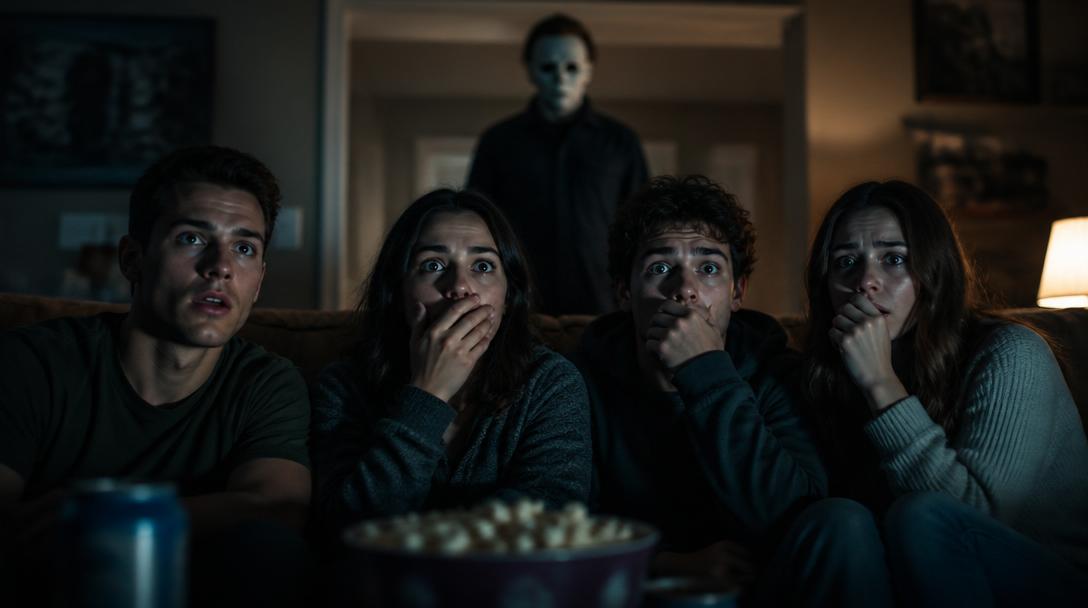
Halloween is another essential entry for anyone who enjoys the genre’s hidden history. John Carpenter’s film introduced Michael Myers as a silent, almost mythic figure, and its eerie effect was strengthened by Carpenter’s own score, which became one of the most recognizable in horror. Jamie Lee Curtis’s casting also matters here because the film helped launch her career and connected Halloween to a later wave of so-called slasher movies. For trivia fans, it is especially notable that the film’s masked killer was designed to feel anonymous and unstoppable, a visual idea that has been copied countless times since.
Horror trivia also rewards fans who pay attention to practical effects and filmmaking craft. In Alien, the creature design by H. R. Giger gave the film its unsettling biomechanical look, while the production used a combination of model work, costumes, and careful lighting to preserve the monster’s mystery. The chestburster scene remains one of the most discussed moments in horror history because of the cast’s genuine shock, which helped make the sequence feel unnervingly real. That kind of behind-the-scenes detail matters because horror often succeeds when actors and audiences react with authentic surprise.
Some of the best trivia comes from films that became cultural landmarks almost by accident. A Nightmare on Elm Street introduced Freddy Krueger as a dream-stalking villain who could invade the safest place of all, and the concept gave the series a flexibility that ordinary slashers did not have. Wes Craven’s idea tapped into a universal fear of sleep and helplessness, which made the character linger in the imagination long after the credits rolled. That is a reminder that the most effective horror concepts are often the simplest ones, built around a fear everyone already understands.
Modern horror has added its own set of trivia-worthy milestones. The Blair Witch Project used a found-footage style and a famously minimal marketing campaign to convince many viewers that what they were seeing might be real, which helped it become a landmark in late-1990s horror. Scream, released in 1996, revived the slasher genre by making characters self-aware about horror movie rules while still delivering genuine suspense. Both films show how the genre keeps reinventing itself, whether through new technology, clever promotion, or a sharper sense of irony.
What makes horror trivia so satisfying is that it often reveals how much movie magic depends on restraint, timing, and audience imagination. The best horror films do not simply show something frightening; they build a system of clues, production choices, and cultural echoes that fans can keep unpacking long after the theater lights come up. For true film buffs, that is the real thrill, because every scary movie has another layer waiting in the dark.