Einstein’s Riddle Still Stumps Bright Minds
Einstein’s Riddle has a reputation that far outstrips its modest appearance. At first glance it seems like a simple grid puzzle about houses, colours, pets, drinks and nationalities, yet the moment you start matching clues, the whole thing becomes a test of discipline as much as intelligence. That is why it has endured for decades on quiz sites, in puzzle books and in classrooms where teachers want more than a quick answer. It asks solvers to do something surprisingly difficult: hold a web of facts in their head and use each new clue to rule out possibilities without losing track of the rest.
The puzzle is often associated with Albert Einstein, though there is no solid evidence that he created it. What matters more than its uncertain origin is the way it works. You are given a row of houses with different attributes, and a set of clues that must be combined logically until each detail fits exactly one place. Solving it is less about fancy mathematics than about careful deduction, the kind that rewards anyone willing to slow down and write things out.
That is part of its charm. In an age when so many quizzes are built around instant recall, Einstein’s Riddle demands a different kind of mental effort. You cannot simply know the answer or guess your way through; the puzzle pushes you to map relationships, spot contradictions and eliminate dead ends. For many people, that is what makes it satisfying rather than frustrating, because every deduction feels earned.
The classic version usually involves five houses in a line, each with a different colour and each occupied by a person of a different nationality. Other clues connect the residents to drinks, cigarettes and pets, creating a dense lattice of information. One clue may tell you that the Norwegian lives next to the blue house, while another says the green house is immediately to the left of the white house. A separate clue might reveal that the owner of the green house drinks coffee, and before long you are juggling half a dozen linked facts at once.
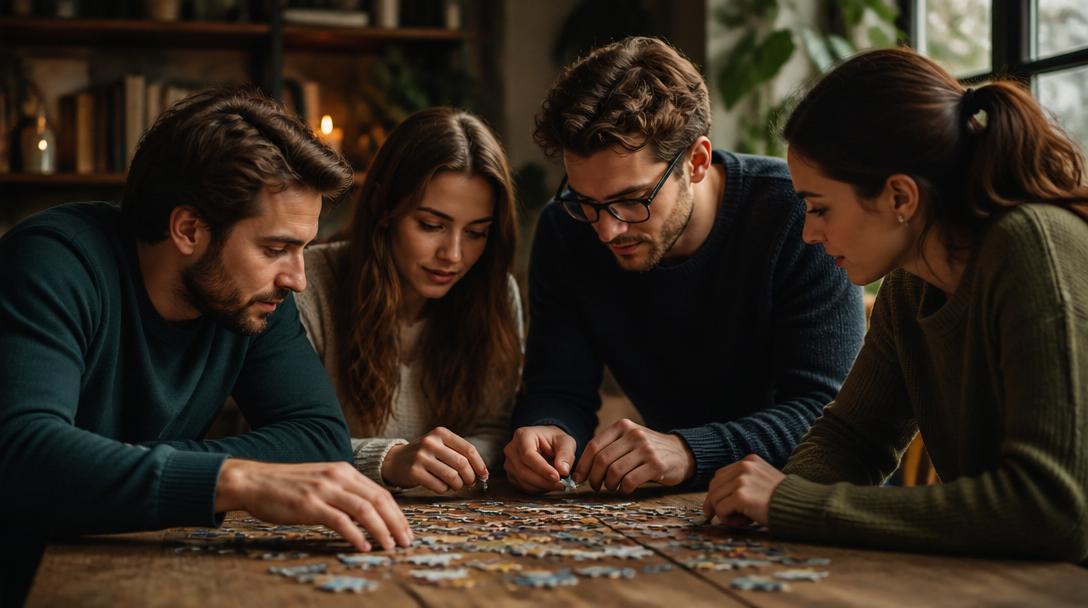
Good solvers tend to treat the puzzle like a small investigation. They do not rush to fill in every blank, because one careless assumption can send the whole chain off course. Instead, they start with the clues that give the strongest position or relationship, then build outward from there. If a clue says two things are adjacent, that immediately narrows the field. If another says one house is first or last, the possibilities shrink again. The puzzle becomes a process of narrowing, not guessing.
That process also explains why the riddle feels intimidating to so many people. Human memory is not especially good at juggling multiple moving parts without help, and the puzzle punishes anyone who tries to rely on instinct alone. A pencil and a neat grid make a huge difference, because they externalise the problem and free the brain to focus on logic rather than storage. In that sense, the riddle is not just a test of wit but a lesson in method, showing how structure can turn chaos into clarity.
It is also a reminder that intelligence comes in different forms. Someone who struggles with rapid-fire trivia might excel at this kind of puzzle, while a brilliant general knowledge player may find the logic chain maddening. Einstein’s Riddle rewards persistence, pattern recognition and the willingness to revisit earlier assumptions. Those are valuable habits far beyond quizzes, whether you are organising a project, checking a set of instructions or untangling a workplace problem.
Part of the puzzle’s lasting appeal lies in the moment when the last piece falls into place. Suddenly the whole grid makes sense, and what seemed impossible a minute earlier becomes almost obvious in hindsight. That feeling is addictive, which is why the riddle keeps returning in new forms across books, websites and social media. It offers a rare kind of satisfaction: not the thrill of a lucky guess, but the quiet certainty that every answer has been earned step by step.
For readers tempted to take it on, the best advice is simple. Work slowly, mark every clue, and resist the urge to jump ahead. The point is not to prove you are the fastest person in the room, but to see whether you can keep a clear head while the puzzle tries to cloud it. That is what gives Einstein’s Riddle its staying power, and why it still feels like a proper challenge even to people who pride themselves on thinking fast.