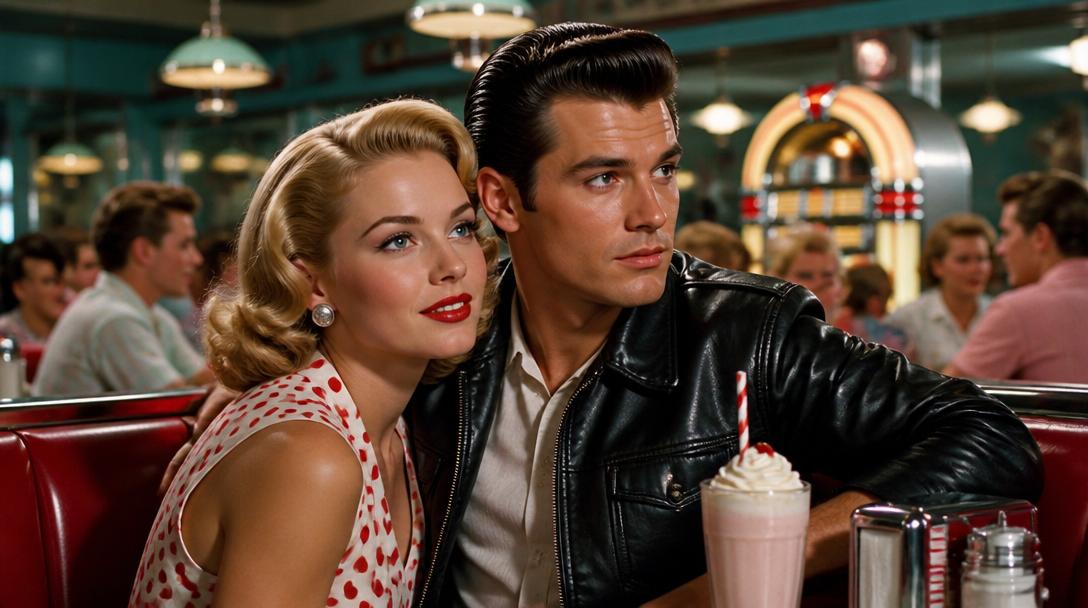
1950s Pop Culture in Full Technicolor
If you want to understand why the 1950s still feel so vivid, start with the speed of change. In just ten years, radio stars had to share attention with television personalities, cinema began competing with the living room, and teenagers emerged as a cultural force with money to spend and tastes of their own. That shift gave the decade its particular charge, because pop culture was no longer something handed down from adults alone. It was increasingly something young people could claim as theirs.
Music is one of the easiest ways to hear that transformation. The rise of rock and roll brought a new urgency to the charts, with artists such as Elvis Presley, Chuck Berry, Little Richard and Buddy Holly helping to define the sound of the era. Their records were not just popular; they were disruptive, blending rhythm and blues, country and gospel influences into something that felt fresh and slightly rebellious. At the same time, crooners and vocal groups remained hugely successful, which meant the decade was not a clean break but a crowded conversation between old and new tastes.
Television gave that conversation a screen. By the middle of the decade, family viewing had become part of American life, and programmes such as I Love Lucy, The Ed Sullivan Show and Father Knows Best helped establish television as a daily ritual. The medium also made performers into household names at remarkable speed, because a singer, comedian or actor no longer needed years of exposure to become familiar. One appearance could be enough to make an audience feel they knew someone personally, and that intimacy became one of television's most powerful tricks.
Cinema, meanwhile, responded by becoming bigger, louder and more spectacular. Hollywood leaned into widescreen formats such as CinemaScope, while colour films became increasingly common and epics drew crowds looking for something television could not provide. The decade also produced iconic movies that still anchor discussions of the era, including Rebel Without a Cause, Singin' in the Rain, The Seven Year Itch and The Ten Commandments. Even when the stories were not directly about youth culture, the stars often became central to it, with James Dean and Marilyn Monroe standing for very different but equally potent ideas of style, vulnerability and glamour.
Fashion and design translated those images into everyday life. Saddle shoes, poodle skirts, letterman jackets and tailored suits became shorthand for 1950s youth and respectability, even though real wardrobes varied widely by region and class. The look of the decade was polished but not static, shaped by postwar optimism, suburban growth and the influence of magazines, department stores and movie screens. Home interiors followed the same pattern, with sleek appliances, pastel colours and modern forms suggesting that the future had arrived in the kitchen as well as on the dance floor.
Advertising turned all of this into a language of aspiration. Campaigns sold not just soap, cars and cigarettes, but the idea that owning the right product meant joining the right way of life. Television commercials in particular helped standardise tastes, because they reached millions of viewers in shared moments and repeated the same messages until they felt like common sense. The result was a culture that linked consumption to identity with unusual force, something later decades would refine rather than invent.
Print culture still mattered too, especially for young readers. Magazines such as LIFE and Time documented the decade's public face, while comic books, fan magazines and pulp fiction fed more specialised appetites. The postwar boom in paperback publishing made books cheaper and easier to carry, helping popular fiction reach larger audiences. Even the quiz-worthy details of the decade often come from this mix of media, because the 1950s were a period when images and slogans circulated so widely that they became part of ordinary speech.
The social backdrop matters just as much as the entertainment itself. The decade is often remembered through a polished lens, but it was also a time of racial segregation, Cold War anxiety and strict expectations about gender and family life. Popular culture sometimes reinforced those norms and sometimes pushed against them, which is one reason the era remains so interesting to revisit. A quiz about the 1950s is never only about names and dates; it is also about recognising how culture reflects the tensions of its moment.
That tension gave the decade its lasting afterlife. Later generations kept returning to the 1950s as a source of style, nostalgia and reinvention, whether in film, music, fashion or television. The decade's symbols are so durable because they are easy to picture: a jukebox glowing in a diner, a black-and-white television set in a living room, a drive-in screen under the night sky, a record spinning while teenagers waited for the next big song. Put them together and the 1950s stop being a textbook chapter and become a vivid world that still invites us back in.